
The list showcases some of the most beautiful Ferraris ever made, celebrated for their enduring design and elegance.
Ferrari: Sculpted Masterpieces That Define Automotive Artistry
For over seven decades, Ferrari has not merely manufactured automobiles; it has sculpted them. Each creation from the Prancing Horse emblem is a testament to an unwavering pursuit of perfection, a symphony of raw performance intertwined with breathtaking aesthetics. These are not just cars; they are rolling works of art that have captivated the world, setting benchmarks in design and engineering that continue to inspire. As an industry expert with a decade immersed in the automotive realm, I’ve witnessed firsthand how the allure of a Ferrari transcends mere horsepower figures and lap times. It’s in the curve of a fender, the intensity of a headlight’s gaze, and the inherent drama that emanates from every meticulously crafted line. This curated selection delves into the most beautiful Ferrari cars, celebrating models that have etched their names into the annals of automotive history, not just for their speed, but for their indelible impact on design and elegance. We’re talking about iconic Ferrari designs that have defied the passage of time, becoming coveted by collectors and adored by enthusiasts worldwide.
The sheer artistry involved in creating these machines is what sets Ferrari apart. While many manufacturers focus on the utilitarian aspects of transportation, Ferrari has consistently elevated the automobile to an art form. The marriage of cutting-edge technology with timeless design is a Ferrari hallmark, a philosophy that has produced some of the most stunning Ferrari models the world has ever seen. This exploration is a deep dive into these automotive masterpieces, presented in a sequence that highlights their unique contributions to the legacy of Ferrari car design.
Ferrari 250 LM: A Le Mans Legend Forged in Beauty
The year 1963 marked the unveiling of the Ferrari 250 LM at the Paris Motor Show, a car that immediately captured the imagination. Developed from the proven foundation of the Ferrari 250P, the 250 LM introduced a closed-top coupe body, a collaborative effort between Ferrari and the esteemed design house Pininfarina. This fusion of engineering prowess and design finesse resulted in a vehicle that was not only built for the grueling demands of endurance racing but was also undeniably beautiful.
Underneath its captivating exterior lay a sophisticated chassis. The lengthened Dino Sports Prototype (SP) chassis, shared with its predecessor, housed the venerable 250 GT V12 engine. This engine, fitting comfortably within the three-liter racing displacement limit, was a natural choice for performance. The chassis itself was a complex marvel, featuring four tubes that circulated oil and water to radiators positioned at the front. This ingenious layout aided in achieving a better weight balance, though it did present a vulnerability to damage in accidents and contributed to cockpit heat.
The 250 LM was equipped with fully independent suspension and inboard rear brakes, systems demanding robust half-shafts to manage the immense forces. The result was a remarkably lightweight car, tipping the scales at a mere 850 kg when dry. Despite its engineering brilliance and racing pedigree – highlighted by its victory at the 1965 24 Hours of Le Mans, the very race it was named after – the 250 LM faced homologation hurdles. The FIA questioned whether its rear-engined configuration, when compared to the front-engined 250 GT, met the necessary production figures. Nevertheless, the 250 LM secured its place as a racing icon and a truly beautiful Ferrari race car. The displacement was increased to 3.3 liters in May 1963, and these machines found their way into the hands of privateer teams, further solidifying their legendary status.
Ferrari F355 GTS: The Epitome of 1990s Automotive Allure
When discussing most beautiful Ferraris, the F355 GTS inevitably enters the conversation, often hailed as one of the most sensuously styled Maranello machines. Introduced in 1995 as part of the F355 range, the GTS variant built upon the Berlinetta’s foundation, distinguished by its captivating targa-style removable roof, offering an exhilarating open-air driving experience. The heart of the F355 GTS was its potent 40-valve V8 engine, an powerplant that delivered a formidable 375 horsepower and 268 lb-ft of torque. This engine was a marvel, revving to an astonishing 8,250 rpm, and producing an exhaust note that is quintessentially Ferrari – a visceral, intoxicating symphony.
The performance figures were equally impressive for its era: a 0–62 mph sprint in just 4.7 seconds and a top speed of 183 mph. These numbers, coupled with its stunning design, a satisfying gated shifter, and that booming V8, set the F355 GTS apart in a crowded automotive landscape. Inside, the cabin exuded quality with excellent materials, while the exterior showcased perfect proportions. The F355 GTS carried the torch of pop-up headlights, a design cue that harked back to the stylish cars of the eighties and nineties, adding to its distinctive charm. While visually similar to the preceding 348, the F355’s completely reworked body was the product of rigorous wind tunnel research, ensuring aerodynamic efficiency was as beautifully integrated as the car’s aesthetic. Pininfarina’s masterful design work on the F355 cemented its reputation as one of the most gorgeous Ferrari cars of the 1990s, a true testament to Ferrari exotic car design.
Ferrari Dino 246 GT: A Mid-Engined Marvel with Enduring Charm
The introduction of the Ferrari Dino sub-brand in 1968 heralded a new era for Ferrari, with the 246 GT serving as its flagship. This car emerged from a strategic need to compete with rivals like the Porsche 911, requiring Ferrari to develop more compact V6 and V8 engines. The Dino name itself holds a poignant significance, honoring Alfredo “Dino” Ferrari, Enzo Ferrari’s son, who tragically passed away at the young age of 24. Dino was instrumental in persuading Enzo to explore V6 powertrains, a departure from the marque’s signature V12s.
The lineage began with the front-engined Fiat Dino in 1966, which first featured the 2.0-liter engine. However, it was the subsequent mid-engined iteration, the 246 GT, that truly captured the spirit of a sports car. Recognizing that the V6 produced less power than their V12 brethren, Enzo strategically placed the engine behind the driver, creating Ferrari’s first mid-engined road car, a configuration that revolutionized handling and balance. The original Dino’s engine was a 2.0-liter unit, but the 246 benefited from a larger 2.4-liter V6. After an eight-year successful run, the Dino brand was phased out, with the final Dino 308 GT4 eventually being rebadged as a Ferrari. The Dino 246 GT remains a celebrated classic Ferrari beauty, offering excellent handling and a more accessible entry point into the world of prancing horse automobiles.
Ferrari 288 GTO: A Homologation Hero of Unrivaled Aggression
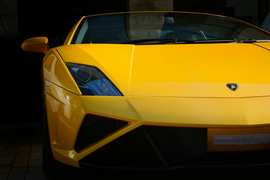
Unveiled in 1984, the Ferrari 288 GTO was a road-legal masterpiece that perfectly blended devastating power with breathtaking beauty. Developed concurrently with the iconic Testarossa, the GTO nameplate, standing for Gran Turismo Omologato, evoked the legendary racing heritage of its 1960s ancestor, the 250 GTO. This was a car born from the stringent homologation requirements of the FISA Group B racing championship, demanding the production of 200 customer cars.
The 288 GTO was a formidable machine, powered by a 2.8-liter twin-turbocharged V8 engine. It produced a conservative 400 horsepower, yielding an impressive 140 bhp per liter. Its peak speed was listed at 189 mph, a testament to its racing DNA. The termination of the wild Group B supercar series meant that nearly all of the 272 288 GTOs produced were converted for street use, making them exceptionally rare. Their unique combination of composed handling and untamed aggression earned them the moniker of some of the most exciting automobiles ever created.
Visually, the GTO’s styling was an evolutionary step, drawing inspiration from Pininfarina’s twin mid-engined masterpieces of the 1970s: the Berlinetta Boxer and the 308. The car’s aerodynamics were meticulously designed to comply with homologation regulations while retaining a menacing road presence. The Ferrari 288 GTO price reflects its extreme rarity and desirability, making it one of the most sought-after modern classic Ferrari cars. Its aggressive yet refined silhouette continues to captivate, solidifying its status as a truly beautiful Ferrari supercar.
Ferrari 365 GTB/4 Daytona Berlinetta: The Quintessential Front-Engined V12
The Ferrari 365 GTB/4 Daytona Berlinetta stands as a monumental figure in Ferrari’s lineage, representing the final front-engined V12 grand tourer of the classic era. Debuting at the 1968 Paris Motor Show, the Daytona set a blistering pace with its top speed of 170 mph, defining the benchmark for fast cars of its time. While its front-mounted V12 engine was an evolution of the 275 GTB/4’s powerplant, bored out to 4.4 liters, the Daytona was a cohesive package of performance and style.
The car’s engineering emphasized a balanced weight distribution, achieved through features like four-wheel disc brakes, independent suspension, and a rear-mounted transaxle. The exterior design, a collaborative effort between Lionardi Fioravanti and Pininfarina, was characterized by a long hood, a short tail, and a sharp nose. Initially, this nose featured four lights concealed behind a Plexiglas cover, later evolving to the iconic pop-up headlights. The 4.4-liter V12 engine produced 363 horsepower and 319 lb-ft of torque, propelling the Daytona to its remarkable top speed.
In a landscape dominated by the outlandish Lamborghini Miura, the Daytona offered a more refined yet equally potent proposition. It compensated for a lack of outrageousness with superior drivability, making it a true grand tourer. The Ferrari Daytona price has seen significant appreciation, reflecting its status as a collectible Ferrari icon. Its balanced weight distribution and sophisticated suspension system underscored its focus on handling and agility, solidifying its reputation as one of the most elegant Ferrari models. The Daytona’s creation predated Fiat’s significant stake in Ferrari and the subsequent design impositions, making it a pure expression of Ferrari’s classic era.
Ferrari F50: An Underrated Icon of Raw Motorsport Purity
To commemorate its 50th anniversary, Ferrari unleashed the F50, a supercar that masterfully fused breathtaking beauty with untamed beastliness. Echoing the minimalist, motorsports-centric philosophy of its predecessors, the 288 GTO and F40, the F50 prioritized raw performance over occupant comfort. Its structural integrity was a key selling point: a rigidly mounted chassis with minimal rubber in the suspension, and the absence of subframes for the front, rear, and engine. The engine and transmission served as the rear structural support, directly housing suspension components and attaching to the central tub.
At its core was a magnificent 4.7-liter V12 engine, delivering a potent 512 horsepower and 347 lb-ft of torque to the rear wheels. Mated to a six-speed manual transmission, this powerplant and gearbox were derived from Ferrari’s 1990 Formula One car, imbuing the F50 with unparalleled racing pedigree. It boasted a top speed approaching 200 mph and could achieve 0–60 mph in a mere 3.7 seconds.
The F50’s extensive use of carbon fiber contributed to its exceptionally low weight, enhancing its performance and agility. Its advanced aerodynamic features, including a substantial rear wing and a diffuser, ensured stability at high speeds and generated crucial downforce. While sometimes considered an “underrated beauty,” the F50 is a potent symbol of Ferrari’s engineering prowess and a truly remarkable Ferrari road legal race car. Its dramatic presence and race-derived mechanics make it a standout among beautiful Ferrari supercars.
Ferrari 250 GT Lusso: The Luxurious Racer’s Embrace
The Ferrari 250 GT Lusso occupied a unique niche, existing as the perfect bridge between Ferrari’s hardcore racing machines and its ultra-luxury offerings. Its purpose was to deliver the exhilarating thrill of a Ferrari sports car while remaining eminently capable for everyday driving. The “GT/L” designation, shorthand for Gran Turismo/Lusso, denoted a larger, more luxurious evolution of the outgoing 250 GT, widely celebrated as one of the most aesthetically pleasing vehicles to ever wear the Prancing Horse.
Its sporty disposition was undeniable, thanks to a potent V12 engine fed by three Weber carburetors and the adoption of a Short Wheelbase (SWB) chassis, a feature shared with some of Ferrari’s earlier race cars. The GT/L’s proportions were simply impeccable, resulting in a sleek profile characterized by a lengthened body, gracefully curved fenders, slim pillars, a shortened trunk, and an attractive three-piece front bumper.
Designed by Pininfarina and meticulously crafted by Carrozzeria Scaglietti under Enzo Ferrari’s watchful eye, the 250 GT Lusso was conceived as a grand tourer. However, its racing-derived chassis and engine meant many owners naturally gravitated towards track use. Sharing the 250 GTO’s SWB, disc brakes, suspension, and engine, it was a car that blended luxury with undeniable performance credentials. The Ferrari 250 GT Lusso value underscores its desirability as a timeless Ferrari design. It was also the first Ferrari road car to feature a ducktail spoiler, a design element pioneered in racing and later adapted for road cars, a testament to its innovative spirit.
Ferrari 250 GTO: The Unobtainable Holy Grail of Automotive Perfection
The Ferrari 250 GTO is not merely a car; it is an automotive legend, a “Holy Grail” for collectors and enthusiasts alike. Widely regarded as one of the ultimate production road racers, its classic proportions and striking profile render it instantly recognizable. This recognition is amplified by its unparalleled success on the racetrack, a history that further cements its mythical status.
With only 36 units ever produced between 1962 and 1964, the 250 GTO stands as the most sought-after Ferrari model in existence. Its innovative design and significant record in road racing contribute immensely to its mystique. The GTO’s aerodynamic form, a masterful creation by Giotto Bizzarrini who extensively utilized wind tunnel testing, combined with its potent, hand-built V12 engine, allowed it to achieve an incredible top speed of 170 mph.
The 250 GTO was also groundbreaking in its engineering, featuring the first car with a rear spoiler seamlessly integrated into the bodywork. Its tall rear end and whisper-quiet performance at cruising speeds belied its ferocious racing capability, quickly establishing it as a motorsports legend. The Ferrari 250 GTO price is astronomical, often reaching tens of millions of dollars, a reflection of its extreme rarity, historical significance, and peerless beauty. It is widely considered one of the most aesthetically pleasing cars ever made, a benchmark for beautiful classic Ferrari cars and a symbol of an era when race cars could indeed be driven on the street. The design of the Ferrari 250 GTO, heavily influenced by the Ferrari 250 GT SWB and sculpted by Sergio Scaglietti, presents an aggressive yet refined silhouette, with its prominent grille and rounded bodywork exuding a classic and alluring appeal.
Ferrari Testarossa: An 80s Icon Defined by Boldness
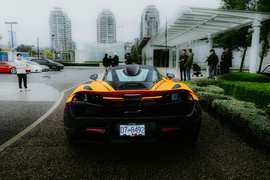
The Ferrari Testarossa is a name synonymous with 1980s automotive excess and high performance, a car that, despite initial polarizing reactions to its unconventional appearance, has evolved into one of the most legendary and visually appealing Ferraris ever produced. Designed by Pininfarina, the Testarossa boasted a futuristic wedge-shaped profile and a low, wide stance, its sleek, angular lines and signature pop-up headlights contributing to a clean and aerodynamic front end.
At its heart lay a formidable 5.0-liter flat-12 engine, generating 390 horsepower and 354 lb-ft of torque. This powerplant propelled the Testarossa to a top speed of 180 mph, with 0–60 mph achieved in a brisk 5.6 seconds. The car’s striking appearance, potent engine, and outstanding performance immediately cemented its status as an instant classic. The Testarossa’s enduring demand among collectors stems from its unmistakable look and thrilling performance, making it a highly desirable 80s supercar icon.
One of the most defining and iconic design elements of the Testarossa is its distinctive side strakes, often referred to as “cheese grater” cooling vents, which added to its aggressive and aerodynamic character. The Ferrari Testarossa cost varies significantly based on condition and provenance, but its iconic status ensures its place among most beautiful Ferrari cars.
Ferrari 550 Maranello: A Return to Classic Grand Touring Form
The Ferrari 550 Maranello holds a special place in the marque’s history, marking a triumphant return to the classic front-engine, rear-wheel-drive drivetrain layout, a configuration absent since the discontinuation of the 365 GTB/4 Daytona in 1973. Designed with grand touring in mind, it offered a level of comfort that surpassed the concurrent F355 and F50 models.
Named in homage to Ferrari’s headquarters in Maranello, the 550 was introduced in 1996. It leveraged technology from the 456 2+2 but featured an entirely new 5.5-liter V12 engine, capable of producing nearly 500 bhp. The car’s construction comprised a steel chassis, a modified version of the one found in the F456, clad in an aluminum alloy body.
This magnificent engine was paired with a 6-speed manual transaxle gearbox, driving the rear wheels. The 0–60 mph sprint was completed in 4.3 seconds, with a top speed of 199 mph. The Ferrari 550 Maranello boasts a design that is both classic and elegant, a testament to its timeless appeal. Its excellent performance and handling make it an absolute delight to drive, and its sleek, understated design has stood the test of time, making it one of the most sophisticated Ferrari models. The Ferrari 550 Maranello for sale often represents a compelling entry into V12 Ferrari ownership.
Ferrari 296 GTB: The Hybrid Revolution with Stunning Aesthetics
The Ferrari 296 GTB represents a significant and revolutionary chapter in Ferrari’s storied history, ushering in the era of V6 hybrid powertrains for its road cars. Unveiled in 2021, the 296 GTB masterfully merges Ferrari’s renowned performance and design ethos with cutting-edge hybrid technology, presenting a forward-looking supercar that harmonizes sustainability with exhilarating power.
At its core, the 296 GTB features a 3.0-liter twin-turbocharged V6 engine seamlessly integrated with an electric motor. This potent combination generates a staggering 818 horsepower and 546 lb-ft of torque, positioning it as one of Ferrari’s most powerful models despite its smaller engine displacement. The electric motor not only provides an extra surge of power but also enhances efficiency, enabling the 296 GTB to travel up to 15 miles on electric power alone. This plug-in hybrid system allows Ferrari to meet contemporary environmental regulations without compromising the thrilling driving experience that defines the brand. With its hybrid setup, the 296 GTB achieves a breathtaking 0–60 mph in just 2.9 seconds and a top speed exceeding 205 mph, showcasing blistering speed and exceptional agility.
The Ferrari 296 GTB’s exterior is a captivating blend of modern innovation and classic design cues. Its sleek form is aerodynamically optimized, with Ferrari emphasizing clean lines and smooth surfaces to maximize performance. The rear design is particularly distinctive and compact, featuring active aerodynamics, including a retractable rear spoiler, to ensure optimal downforce and stability at high velocities. The Ferrari 296 GTB price reflects its cutting-edge technology and exclusive nature. It marks Ferrari’s first road car with a V6 engine since the Dino, beautifully bridging heritage with advanced hybrid technology, and offering a glimpse into the future of performance hybrid supercars.
Ferrari 308 GTB: A Timeless Emblem of 70s and 80s Ferrari Excellence
The Ferrari 308 GTB stands as a quintessential representation of Ferrari’s aesthetic and engineering prowess during the 1970s and 1980s. While perhaps not ranking as highly as some other legendary models on this list, its enduring appeal and pure driving pleasure are undeniable. Introduced in 1975, this mid-engined V8 machine, designed by Pininfarina, was the first of its kind from Ferrari.
While its performance metrics may seem modest by today’s standards, the 308 was, and remains, an immensely enjoyable car to drive. Its carb-fed 2.9-liter mid-mounted V8 engine produced 252 hp, propelling the approximately 2,000-pound Ferrari to 60 mph in around 6 seconds, a respectable figure for its time, with a top speed of 152 mph. The classic design, characterized by its iconic wedge shape and functional vents, still possesses a modern allure.
Ferrari expanded the 308 lineup with various coupe and convertible variants. The introduction of fuel injection in 1980, followed by a four-valve-per-cylinder V8 in 1982, and a larger 3.2-liter engine in 1985 (resulting in the 328 GTB), demonstrated continuous evolution. Our selection often leans towards the improved 328 due to its enhancements in build quality and mechanical reliability. The Ferrari 308 GTB value has seen a steady increase, making it a popular choice for those seeking a beautiful vintage Ferrari. Both the 308 and 328 feature mid-mounted naturally aspirated V8 engines, with the 328 offering a bump in horsepower. The Pininfarina-designed bodywork, with its sleek lines, pop-up headlights, and wedge shape, has become one of Ferrari’s most iconic designs, epitomizing the best-looking Ferrari models of its era.
Ferrari Monza SP1: The Purist’s Open-Air Driving Dream
The Ferrari Monza SP1 is a limited-edition, open-top speedster meticulously crafted for the ultimate unfettered driving experience. As part of Ferrari’s prestigious Icona series, it pays a profound homage to the brand’s legendary racing heritage, drawing inspiration from classic Ferrari barchettas of the 1950s, such as the 166 MM and 750 Monza. The Monza SP1 is a single-seater masterpiece, designed for the purist driving enthusiast who craves an unadulterated connection with the machine and the road.
At the heart of the Ferrari Monza SP1 beats a naturally aspirated 6.5-liter V12 engine, borrowed from the formidable Ferrari 812 Superfast. This colossal powerplant unleashes an awe-inspiring 809 horsepower and 530 lb-ft of torque, ensuring that every drive is an event. The design of the Monza SP1 is a contemporary interpretation of the classic barchetta style. Its sleek, minimalistic bodywork emphasizes clean, flowing lines and a low, sculpted silhouette that evokes the spirit of Ferrari’s iconic racing roadsters from the mid-20th century.
With no roof or windshield, the SP1 offers an unparalleled open-air driving sensation. To manage airflow and enhance driver comfort at high speeds, Ferrari engineered an innovative “Virtual Windshield,” seamlessly integrated into the car’s aerodynamic system, which effectively diverts air around the driver. The Monza SP1’s body is constructed predominantly from carbon fiber, contributing to its exceptionally lightweight nature and significantly enhancing its performance capabilities. This dedication to lightweight materials and a minimalist interior underscores Ferrari’s unwavering commitment to delivering an uncompromised and exhilarating driving experience, making it a standout among limited edition Ferrari cars.
Exploring these iconic Ferrari models reveals a lineage of automotive artistry that continues to inspire awe and admiration. Each car, a unique expression of Ferrari’s design philosophy, stands as a testament to the enduring allure of the Prancing Horse.
If these beautiful Ferrari cars have ignited your passion, the next step is clear: explore how you can become part of this extraordinary legacy.