
The beauty of automobiles is a subject that sparks endless debate among enthusiasts, critics, and casual observers alike. While personal preferences can vary wildly – one person’s cherished classic might be another’s automotive eyesore – there are certain vehicles that transcend subjective taste, universally recognized for their breathtaking design and enduring allure. For a decade, navigating the automotive landscape, I’ve witnessed firsthand how certain forms, lines, and proportions capture the imagination, becoming more than just machines but true works of art on wheels. These are the cars that leave an indelible mark, not just on the asphalt, but on our collective consciousness.
This exploration delves into some of the most beautiful cars in the world, pieces of engineering that have consistently topped lists and captured hearts, celebrating their aesthetic brilliance, historical significance, and the sheer passion they evoke. We’ll look beyond mere statistics to understand what makes a car truly captivating, examining the confluence of design innovation, cultural impact, and the stories that elevate them to legendary status. For those who appreciate luxury automotive design and the artistry behind iconic vehicles, this journey promises to be an insightful one.
Citroën DS: The Goddess of Innovation and Elegance
Launched at the Paris Motor Show on October 5, 1955, the Citroën DS wasn’t just a car; it was a declaration of post-war optimism and French ingenuity. In a nation rebuilding and looking towards the future, the DS arrived as a revelation, an almost surreal marriage of groundbreaking technology, novel materials, and audacious design. It was an instant sensation, a testament to automotive excellence that resonated deeply. On its debut day alone, Citroën received an astonishing 12,000 orders, a figure that underscored its immediate and profound impact. Over its production run, nearly 1.5 million DS models were produced, solidifying its status as a cultural icon.
This quintessentially French automobile, with its futuristic silhouette, captured the admiration of a discerning clientele. Philosophers, architects, designers, and even the President of France, Charles de Gaulle, were captivated by its avant-garde appeal. De Gaulle, in fact, owed his life to the DS. In August 1962, during an assassination attempt in Paris, machine-gun fire riddled the car, puncturing all its tires. However, thanks to its revolutionary hydropneumatic suspension system, the DS was able to maintain sufficient ground clearance to escape at speed, allowing the President to flee to safety. This incident cemented the car’s legend and reinforced de Gaulle’s unwavering loyalty to his “Goddess,” as the DS was affectionately known. The Citroën DS design remains a benchmark for innovation and stylistic daring in automotive history, embodying a unique blend of art and engineering that still fascinates today.
Bugatti Chiron Sport: Sculpted for Speed and Sophistication
While the Bugatti Chiron Sport boasts a much shorter history than some of its venerable counterparts, its narrative is no less exhilarating. Bugatti has long been synonymous with unparalleled speed, breathtaking beauty, exquisite comfort, and unadulterated luxury. Even as newer contenders emerge, the Chiron, particularly in its Sport variant, continues to command awe with its sheer performance capabilities. Designed with the racetrack in mind, the Chiron Sport represents the pinnacle of automotive engineering for discerning collectors and performance aficionados.
Beneath its sculpted carbon fiber exterior lies a monstrous quad-turbo W16 engine, capable of producing a staggering 1500 horsepower and 1600 Nm of torque. This immense power propels the Chiron Sport from 0 to 100 km/h in a mere 2.5 seconds, with a top speed reaching an eye-watering 420 km/h. It is, without question, the ultimate automotive indulgence for the ultra-wealthy. However, to focus solely on its performance figures would be to overlook its extraordinary aesthetic appeal. The Chiron Sport’s design is a masterclass in aerodynamic artistry, with every line and curve meticulously crafted to slice through the air with maximum efficiency. It’s a harmonious symphony of a bullet and a rocket, a form that not only promises blistering speed but also embodies it visually. The Bugatti Chiron Sport price reflects its exclusivity and the extraordinary engineering involved, placing it firmly in the realm of hypercars.

Aston Martin DB5: The Silver Screen’s Quintessential Charmer
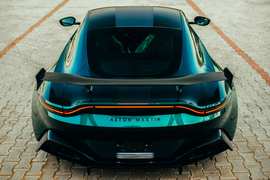
The Aston Martin DB5 transcends its definition as a mere automobile; it is a timeless cinematic icon, a symbol of sophistication and understated British class. Its indelible mark was first made on the silver screen in 1964, in the third James Bond film, Goldfinger. Beyond its striking design, the DB5 captivated audiences with its futuristic gadgets, including the revolutionary revolving license plates, an ejector seat for unwanted passengers, and a sophisticated navigation system that was remarkably advanced for its time.
Since its debut, this four-liter grand tourer, capable of a respectable 233 km/h, has graced the screens in countless other films. It reprised its role as Bond’s chariot in GoldenEye, Tomorrow Never Dies, and Casino Royale, further cementing its legendary status. Even Leonardo DiCaprio was seen behind the wheel of a DB5 in the acclaimed film Catch Me If You Can. For those yearning to own a piece of this cinematic history, Aston Martin has produced 25 replicas of the original Goldfinger model, complete with select gadgets, though the ejector seat is understandably omitted. The Aston Martin DB5 price for these replicas reflects their rarity and the enduring appeal of this iconic vehicle.
Porsche 911 GT3 RS: A Racing Pedigree in a Stunning Package
No discussion of beautiful cars would be complete without the inclusion of a Porsche 911. While the original 1963 model holds immense historical significance, for this list, we’ve chosen a contemporary icon: the 911 GT3 RS. This iteration is a worthy, pure, and ultramodern tribute to the foundational design conceived by Ferdinand “Butzi” Porsche. The GT3 RS is, at its core, a road-legal race car, perhaps not the most practical choice for daily commuting, but undeniably one of the most visually arresting.
Every inch of the GT3 RS is a testament to meticulous craftsmanship, with many elements still shaped by hand at Porsche’s Stuttgart facilities. Despite its racing pedigree, the 911 GT3 RS is far from just a track-day toy; it is a masterpiece of performance and design. The glorious-sounding 4.0-liter six-cylinder boxer engine under its rear deck lid unleashes a formidable 520 horsepower, making it the most potent Porsche engine ever produced for its era. This power translates into breathtaking acceleration, propelling the car from 0 to 100 km/h in just 3.2 seconds. Should the driver refrain from lifting off the accelerator, the car can achieve a top speed of 312 km/h, a truly exhilarating experience. The Porsche 911 GT3 RS specifications highlight its extreme performance capabilities, while its timeless Porsche 911 design continues to capture the hearts of enthusiasts.
Ferrari Testarossa: The 1980s’ Extravagant Icon
When one contemplates an iconic sports car, the Ferrari Testarossa invariably springs to mind. This 1984 Ferrari is arguably one of the most discussed and flamboyant automobiles ever created. Its distinctive side air intakes, a signature design element, and its pop-up headlights immediately set it apart, making it the ultimate sports car for those with discerning taste and a penchant for the extravagant. It became the vehicle of choice for the affluent and, in popular culture, the go-to for fast getaways from law enforcement.
The Testarossa’s fame was significantly amplified by its starring role on television. In the 1980s, viewers of the hit show Miami Vice were treated to the sight of this iconic Ferrari in virtually every episode. The car’s design alone was a powerful selling point, leading to waiting lists of up to five years, a testament to its immense popularity. This demand was fueled not only by its striking looks but also by its exceptional performance, which was truly groundbreaking for its time. It housed the first twelve-cylinder engine featuring four valves per cylinder, displacing 4.9 liters and producing 390 horsepower. This allowed the Testarossa to reach speeds of 290 km/h, making it a formidable machine for escaping pursuit. The Ferrari Testarossa performance and its unmistakable 1980s car design have cemented its place in automotive legend.
Ford Mustang Bullitt: A Cinematic Tribute to American Muscle
The chances of encountering a Ford Mustang Bullitt “in the wild” are exceedingly slim, as only one unit was ever officially exported by Ford. Nevertheless, this modern descendant of the legendary Mustang lineage is a vehicle that commands attention and admiration. Its creation was a special occasion, marking the 50th anniversary of the iconic film Bullitt, in which protagonist Steve McQueen famously pursued two assassins for ten minutes in none other than a Mustang.
This Mustang, weighing over 1800 kilograms, is a visual and auditory spectacle. The V8 engine emits a sound reminiscent of a powerful steed, and its distinctive black grille and angular lines make it instantly recognizable – a rare gem should you ever be fortunate enough to spot it. The Ford Mustang Bullitt features pay homage to its cinematic predecessor, capturing the essence of American muscle car heritage.
Lamborghini Miura: The Birth of the Supercar
With the introduction of the Miura, Lamborghini didn’t just build a car; it redefined what an automobile could be and what it was capable of achieving, effectively birthing the supercar category. It stands as the most significant and arguably the most beautiful car Lamborghini has ever produced. Unveiled to the public in 1966, the Miura, named after a renowned breed of Italian bull, left the world in stunned silence. Its design was visionary, appearing as if it had arrived from the future—a car that was both incredibly sexy and remarkably controversial.
More than just an aesthetic marvel, the Miura was a defiant statement directed at its rival, Ferrari. The genesis of the Miura stemmed from a heated exchange where Ferruccio Lamborghini dared to critique one of Enzo Ferrari’s sports cars. Enzo’s dismissive retort, suggesting Ferruccio stick to making tractors, ignited a fierce rivalry. From that moment, Lamborghini committed to creating cars that would surpass Ferrari in both beauty and performance. The Lamborghini Miura legacy is profound, marking a pivotal moment in automotive history and solidifying Lamborghini’s reputation for creating automotive masterpieces.
Ferrari 250 GTO: The Pinnacle of Rarity and Desire
The Ferrari 250 Gran Turismo Omologato (GTO) is not just a rare supercar; it has been lauded as the “best Ferrari of all time.” Between 1962 and 1964, only 39 examples were ever built, making it exceptionally exclusive from its inception. Owning one required the explicit permission of founder and director Enzo Ferrari himself, a testament to its coveted status.
Its extraordinary beauty is apparent even to the untrained eye. The hand-welded tubular frame, innovative active rear axle, A-shaped suspension, and striking wire wheels combine to create a sports car that is a pure visual delight. The interior, however, is remarkably spartan; it lacks even a speedometer, underscoring its singular focus on performance and driving purity. Yet, a car doesn’t need opulent interiors to possess breathtaking beauty and command astronomical value. While the 250 GTO cost a relatively modest $18,000 in 1962, its immense desirability among collectors has driven its value to absurd heights. In 2018, one example was sold for a staggering 60 million euros, a staggering figure that reflects its unparalleled status in the world of classic car collecting and vintage Ferrari values.
Renault Trezor: A Vision of Electric Future and Sensual Design
The Renault Trezor, while not available for purchase, unequivocally earns its place among our all-time favorites due to its sheer beauty. This electric concept car masterfully blends Renault’s Formula 1 and Formula E racing expertise with a stunning aesthetic and a profound vision of the future. Its groundbreaking design has garnered numerous accolades, including “Best Concept Car 2016” at the Geneva Motor Show and “Most Beautiful Concept Car” at the Italian Concorso d’Eleganza Villa d’Este.
The Trezor’s elegant form is inspired by the principles of attraction between men and women. Its front fascia exudes a feminine grace, while the rear presents a distinctly masculine power. A unique feature is its single-piece lifting door, symbolizing the opening of a jewelry box, a poetic touch to its design. The exterior, crafted entirely from carbon fiber, is adorned with a captivating honeycomb structure. Laser-based wiring forms the rear lights, completing this fantastic and forward-thinking design. The Renault Trezor concept showcases the exciting possibilities of electric vehicle design.
Jaguar E-Type (1962): The Epitome of Automotive Beauty
The Jaguar E-Type, particularly the 1962 model, stands as the undisputed pinnacle of automotive beauty. These aren’t merely our opinions; they echo the sentiments of none other than Enzo Ferrari himself, a man who certainly understood the essence of a truly exceptional automobile. Just a glance at its elongated bonnet, the elegantly sculpted grille, and the iconic silhouette is enough to understand its allure. The gleaming chrome wire wheels, coupled with the graceful chrome bumper, exude an aura of pure class and sophistication.
First introduced in 1961, the E-Type has consistently topped lists of the most beautiful cars ever created. Its magnetism attracted a constellation of stars, including Frank Sinatra, Brigitte Bardot, George Best, and Steve McQueen (who also famously drove a Mustang in Bullitt). Over the years, three generations of the E-Type were produced until 1974, each maintaining its visual charm. Naturally, the E-Type also made numerous appearances on the silver screen and television, featuring in productions like Austin Powers and the series Mad Men. For those with substantial means, 2020 presented a unique opportunity: the E-Type Zero, an electric variant of this timeless classic, became available for around 400,000 euros, offering a modern interpretation of an automotive legend. The Jaguar E-Type value and its enduring classic car appeal continue to captivate collectors and enthusiasts worldwide.
From the avant-garde innovation of the Citroën DS to the raw power and elegance of the Ferrari 250 GTO, these vehicles represent more than just transportation; they are testaments to human creativity, engineering prowess, and an unyielding pursuit of beauty. They remind us that cars can be art, capable of stirring emotions and leaving a lasting legacy.

If you find yourself captivated by the artistry and engineering showcased in these magnificent machines, and are perhaps considering adding a piece of automotive history or future innovation to your collection, why not explore the world of luxury car sales or discover the latest in exotic car models? The journey into automotive passion is one of endless discovery, and your next extraordinary find might be closer than you think.